
In 2023, the Biden administration issued Executive Order 14110, establishing a framework for the United States’ approach to artificial intelligence (AI) governance. According to the White House’s Executive Order on AI, by 2025, the effects of this policy will begin to impact businesses of all sizes. While much media attention has focused on how big tech companies and federal agencies are adapting, small businesses are also facing new compliance expectations that could influence their operations, vendor relationships, and customer trust. This article explores how the 2025 AI Executive Order affects small business compliance and how owners can adopt safe, secure, and trustworthy development strategies.
This is a crucial moment for small business owners as they navigate the implications of the AI Executive Order. The order is significant because it sets a new standard for integrating technology into business operations. Understanding the AI Executive Order can provide insights into market trends and customer expectations. For small businesses, adhering to this order is not merely about compliance; it’s about embracing innovation. The executive order serves as a critical framework that enables small businesses to thrive while meeting new compliance standards.
The introduction of Executive Order 14110 marked a pivotal moment at the intersection of technology and policy. As artificial intelligence becomes increasingly integrated into daily business operations, small enterprises must carefully navigate this evolving landscape. This order not only establishes compliance requirements but also offers guidance on best practices that can enhance customer engagement and operational efficiency. For example, small businesses can leverage AI by incorporating chatbots to improve customer service responsiveness, thereby gaining a competitive advantage.
The AI Executive Order emphasizes the safe secure and trustworthy development of AI deployment to in build consumer trust. Adhering to the order allows small businesses to demonstrate their commitment to ethical practices. Additionally, it sets the tone for how these businesses can position themselves in a technology-driven marketplace. Engaging with the community regarding the AI Executive Order can enhance brand visibility and foster customer loyalty. Transparency about the order promotes trust and encourages greater customer interaction.
Small Business Considerations
Artificial intelligence ai refers to the simulation of human intelligence in machines that are programmed to think and act like humans. Consider, for instance, a local bookstore that integrates AI for personalized recommendations. By analyzing customer purchase patterns, the AI system can suggest books tailored to individual preferences, fostering a deeper connection with customers. This type of innovation aligns with the executive order’s focus on responsible AI usage, driving sales and enhancing customer loyalty.
The executive order is more than just a set of guidelines; it represents a cultural shift in how AI is perceived within business practices. For small businesses, this means recognizing AI as a tool that must be used responsibly. This understanding can lead to increased customer loyalty and improved operational efficiencies. For example, a small retail business that implements AI-driven inventory management systems can reduce waste and optimize stock levels, demonstrating compliance with ethical practices while boosting profitability.
Small businesses should view the AI Executive Order as a guiding principle in their operational strategies. Implementing practices that align with the order can provide a competitive edge. Furthermore, the executive order stresses the importance of education on responsible AI usage. Regular assessments in line with the AI Executive Order enable ongoing improvement within small businesses.
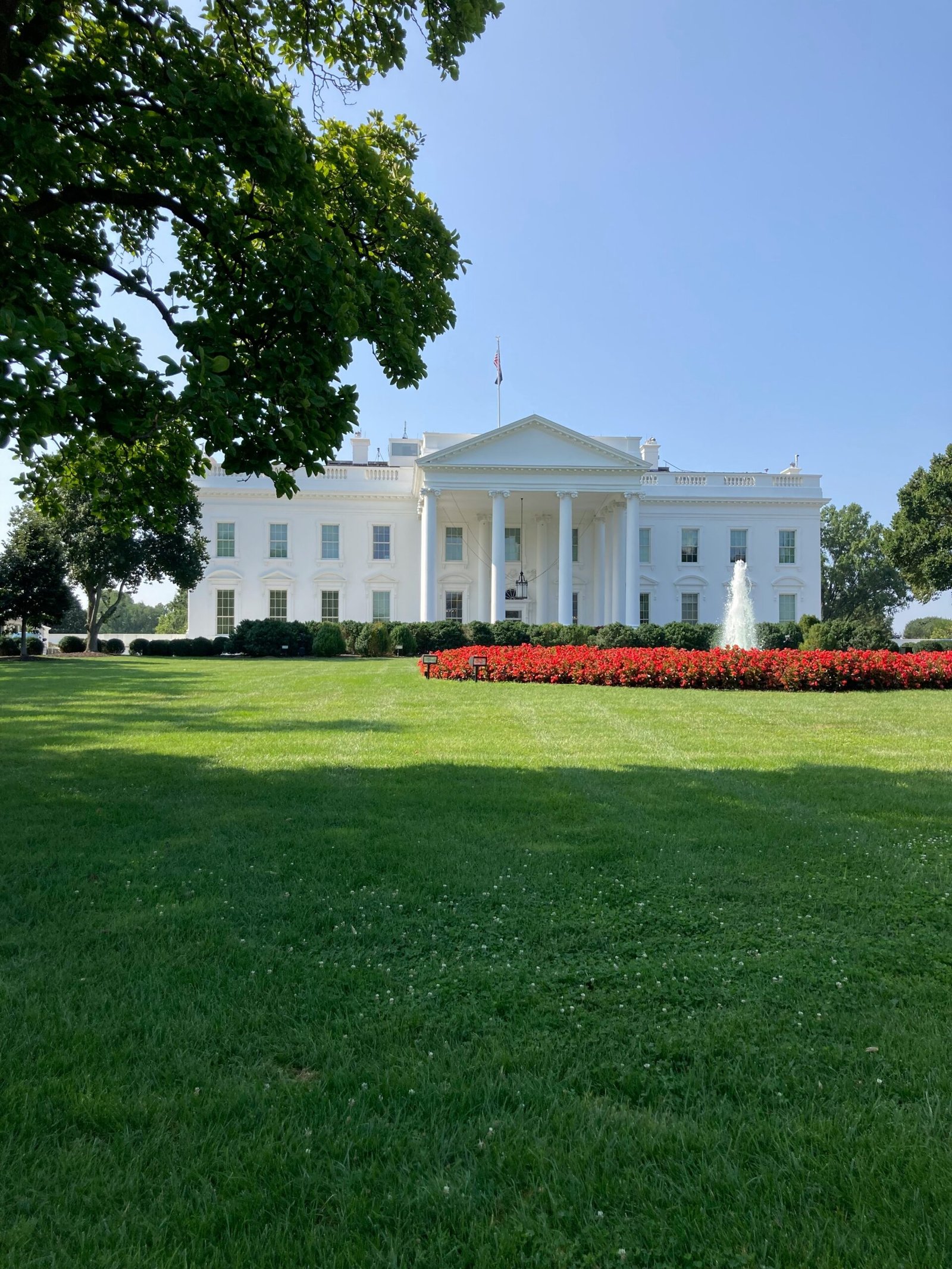
What Is the 2025 AI Executive Order?
Staying informed about the AI executive order is crucial for small businesses to remain competitive and compliant. Understanding its implications can offer strategic advantages and foster accountability in AI usage. By utilizing AI tools for analyzing advertising strategies, small businesses can make informed, ethical decisions, enhancing brand integrity. Transparency about AI practices builds trust and reputation. For example, a financial advisory firm could share how AI improves its investment strategies while adhering to ethical standards, attracting clients who value accountability. Ethical AI use can serve as a unique selling proposition, allowing businesses like a local e-commerce platform to market their commitment to data privacy and customer experience.
Engaging the community through educational events about AI’s impact can strengthen relationships and promote goodwill. A restaurant could host seminars on AI’s benefits for food safety and service, positioning itself as a local innovator.
The executive order emphasizes the need for transparency and safety across AI applications as well as tje development and use of artificial intellegience. Small businesses must align their AI use—be it in marketing, HR, or customer service—with these ethical standards. Compliance with both the executive order and industry-specific regulations, like HIPAA for healthcare providers, ensures ethical operations while protecting sensitive information.
Public trust and worker preparedness are essential, urging businesses to be clear about AI implementation and ensure proper training. By prioritizing ethical AI practices, small businesses can differentiate themselves and enhance their reputation. Regular assessments of AI tools for compliance with evolving standards further demonstrate a proactive approach to responsible business practices.
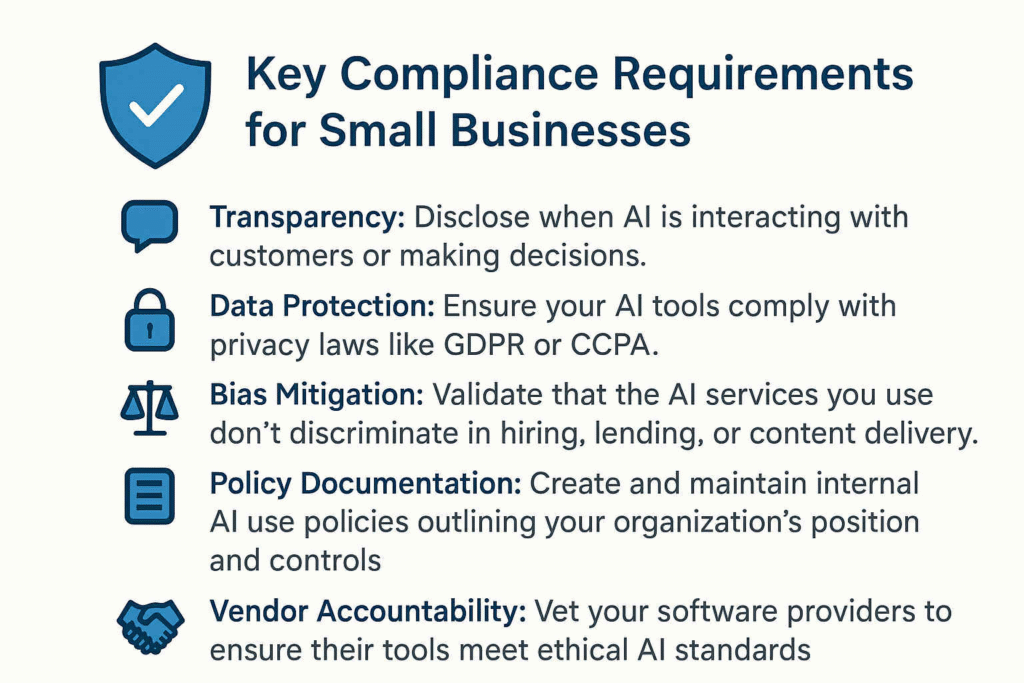
Key Compliance Requirements for Small Businesses
Furthermore, small businesses must remain vigilant regarding changes in AI regulations. By keeping abreast of legislative developments, they can adapt their strategies accordingly. For example, a small financial institution might subscribe to legal updates concerning AI regulations, ensuring that they are always compliant and prepared for future changes.
Even if you’re not developing AI tools, using them in your operations can trigger compliance requirements. Here are a few examples:
- Transparency: Disclose when AI is interacting with customers or making decisions.
- Data Protection: Ensure your AI tools comply with privacy laws like GDPR or CCPA.
- Bias Mitigation: Validate that the AI services you use don’t discriminate in hiring, lending, or content delivery.
- Policy Documentation: Create and maintain internal AI use policies outlining your organization’s position and controls.
- Vendor Accountability: Vet your software providers to ensure their tools meet ethical AI standards.
Businesses should also prepare to demonstrate how they assess risks related to their AI use, including documenting processes for data input, decision-making logic, and reviewing AI outcomes for unintended consequences.
As a further step, small businesses are encouraged to participate in industry groups focused on ethical AI. By collaborating with peers, businesses can share insights and strategies for navigating compliance challenges effectively. For example, a group of small retailers might form a consortium to develop shared guidelines on AI usage, promoting best practices across their industry.
Non-compliance can have far-reaching consequences for small businesses. Beyond legal ramifications, failing to adhere to AI governance standards can damage relationships with partners and suppliers. For instance, a small tech startup that neglects ethical practices may find it difficult to secure contracts with larger firms seeking reliable vendors. This underscores the necessity of prioritizing compliance not just as a regulatory obligation but as a foundation for business growth.
Risks of Non-Compliance with AI Guidelines
Small businesses should partner with technology providers that emphasize ethical AI practices to ensure compliance and share valuable resources. For example, a startup could collaborate with an established AI firm for guidance, increasing its credibility.
Regular audits and assessments of AI technologies are essential for mitigating risks and demonstrating accountability. A financial service provider might conduct quarterly reviews of its AI tools to keep up with compliance standards.
Failing to align with AI governance can lead to:
- Loss of public trust
- Legal action from customers or regulators
- Contract termination with larger enterprises
- Damage to brand reputation and search engine visibility
- Challenges in attracting talent or securing funding
As awareness and regulations around AI evolve, non-compliant businesses may face competitive disadvantages and penalties.
Establishing a clear AI policy is vital for success, safeguarding against risks and enhancing transparency. For instance, a small marketing firm could define how it handles customer data and uses AI tools, building trust with clients.ould develop a clear AI policy that outlines how customer data is handled, how AI tools are utilized, and what measures are in place to protect consumer privacy. This policy can be shared with clients, reinforcing trust and accountability.
How Small Businesses Can Approach AI Governance?
Due to trustworthy development and use, developing an AI policy doesn’t need to be overwhelming. Start by:
- Identifying how and where AI is used in your business
- Documenting your intent, standards, and oversight process
- Reviewing and vetting third-party AI services you rely on
- Staying up to date with national guidance, such as NIST frameworks or industry-specific regulations
Consider appointing an internal point of contact—like a data protection officer or IT lead—who can monitor and document your AI governance activities. If your team is small, this can be a shared responsibility between management and IT support.
Free or Low-Cost Tools to Stay Compliant
- NIST AI RMF (Risk Management Framework): A publicly available guide to AI risk management
- “The Future of Privacy Forum offers practical AI policy resources.” for responsible data practices
- Google’s AI Principles: A model for ethical development and deployment
- Open source policy generators or compliance checklists: Helpful for internal reviews and self-audits
- AI Governance Templates from Educational Institutions: Universities and think tanks often release free policy guides
Conclusion
The ripple effects of the 2025 AI Executive Order are significant for small businesses. Embracing AI responsibilities proactively can lead to sustainable advantages in the market. By prioritizing compliance and ethical practices, small businesses can not only mitigate risks but also position themselves as trustworthy leaders in a competitive landscape. The integration of AI into their operations, guided by the principles of the executive order, will become increasingly vital for long-term success and customer loyalty. As the landscape of AI governance continues to evolve, small businesses must adapt and innovate, ensuring they harness the full potential of AI while fostering trust and ethical practices.
AI isn’t just for tech giants anymore—and neither are AI regulations. With the recent AI executive order, small businesses that use AI-powered tools must start thinking proactively about compliance and guarding against potential pitfalls. Fortunately, with accessible resources and a thoughtful approach, staying compliant doesn’t have to break your budget or consume all your time. As regulatory expectations grow, so too does the opportunity to build trust and future-proof your business by aligning with responsible AI practices. By getting ahead of these expectations now, small businesses can establish themselves as ethical leaders in a rapidly evolving digital landscape while also fostering customer loyalty and satisfaction.
For more news like this visit the rest of our blog here.
